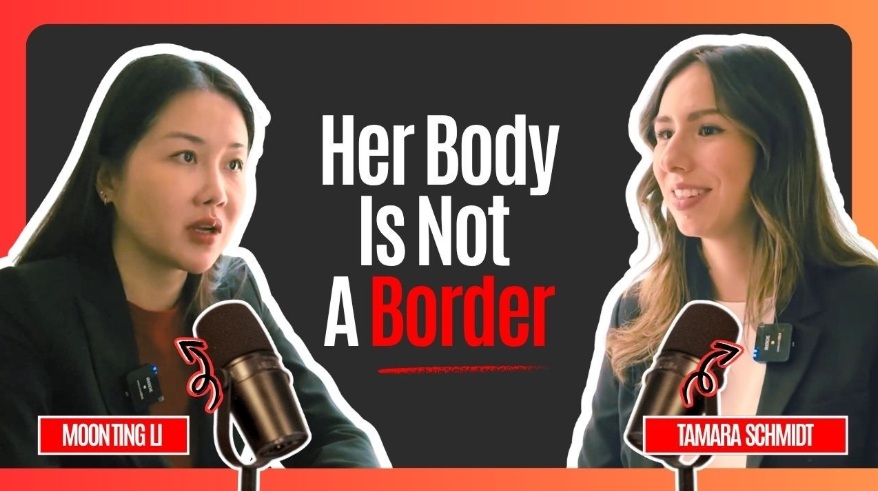
LEFÖ-IBF, the Intervention Centre for Trafficked Women, is Austria’s first and only legally mandated victim protection organization for women and girls who have been affected by trafficking. As it was the World Day Against Trafficking in Persons on July 30th, we wanted highlight, once again, the importance and necessity of the rights and protection of women and girls affected by trafficking, present four key reform proposals, and share news of the interview LEFÖ-IBF Co-Head Tamara Schmidt gave for Season One of lunation.fm’s podcast Fem Renaissance, titled “Her Body Is Not A Border: Human Trafficking, Gender-Based Violence, and the Reality of Migrant Women in Austria”!
Since its founding in 1998, LEFÖ-IBF has advocated for the rights of trafficking survivors. More than 25 years of counseling and support work have taught us one thing: effective victim protection takes more than criminal prosecution. Women and girls need protection, safety, and secure access to their rights.
First: Recovery and reflection periods must be enshrined in law. Survivors need time to stabilize, build trust, and decide on their next steps on their own terms. Survivor protection cannot depend on whether a survivor is immediately able to participate in criminal proceedings.
Second: Survivors’ residency status must be based on individual protection needs. LEFÖ-IBF is therefore calling for a residence permit granted on personal grounds for trafficking survivors, one that doesn’t depend on an ongoing criminal case. Secure residency status doesn’t just protect survivors, it’s also a key measure for preventing re-trafficking.
Third: Survivor protection must be consistently survivor-centered. That means putting survivors’ rights, safety, self-determination, and needs at the center of every decision, and ensuring access to protection, safe housing, and psychosocial, medical, and legal support.
Fourth: Survivor protection must be grounded in intersectional, feminist thinking. Trafficking doesn’t affect all women* and girls in the same way. Background, residency status, age, disability, and other experiences of discrimination all shape survivors’ lived realities and their needs. Effective survivor protection has to account for these different realities and ensure equal access to protection and support for everyone affected.
Beyond this, it matters to us to advance knowledge production around human trafficking and foster fact-based dialogue about its current state, including gender-based violence and how especially vulnerable groups, such as migrant women and girls, are affected by this severe human rights violation, not only globally, but here in Austria as well.
In conversation with Joanna Li Mengting, Tamara Schmidt discussed how gender dynamics shape human trafficking, how these dynamics play out in the industries where trafficking of women and girls is most often observed, and how informal work, disproportionately carried out by women and migrant women, makes it harder for survivors to access state authorities and NGOs.
You can watch the full interview here.